
 Image 1 of 1
Aesculus californica
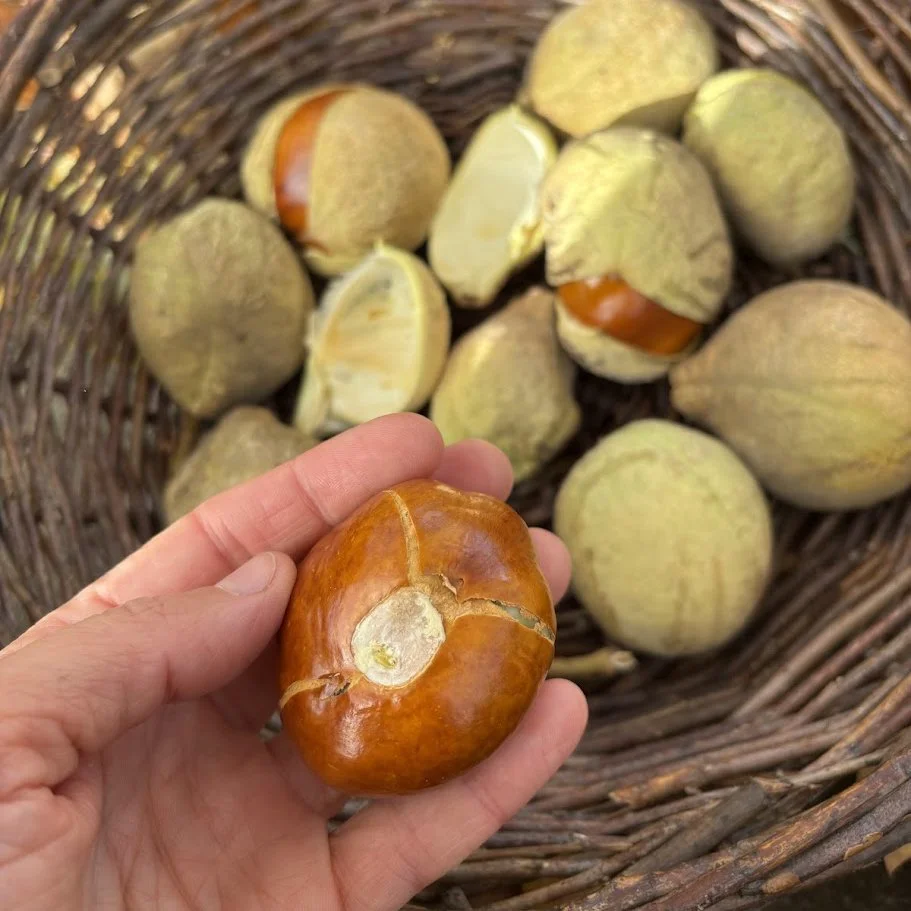
California buckeye, also called California horse-chestnut, is a deciduous tree or shrub endemic to the oak savannah, chaparral regions, valleys and mountain foothills of so-called California. Often multi-trunked with gray, sometimes silvery bark that looks beautiful in the winter landscape. Green compound leaflets emerge in the spring, followed by conical clusters of white flowers, lightly fragrant and pointing upward, that are loved by butterflies and native pollinators! Large, nut-like fruit form in late summer and drop to the ground late fall.
All parts of the plant are poisonous to humans and livestock, though they have traditional uses and special preparations. The pollen may be poisonous to European honey bees, so avoid planting near apiaries. Native insects use the nectar and pollen. Wildlife eat the seeds, like chipmunks and squirrels.
We’re excited about this small, climate-adapted tree for sunny spots and smaller-scale gardens.
Sun-loving and drought resistant. Buckeyes will drop their leaves during the summer dry season, but can hold onto their leaves longer with supplemental water.
Grows about 15’ tall and 15-30’ wide.
Aesculus californica
California buckeye, also called California horse-chestnut, is a deciduous tree or shrub endemic to the oak savannah, chaparral regions, valleys and mountain foothills of so-called California. Often multi-trunked with gray, sometimes silvery bark that looks beautiful in the winter landscape. Green compound leaflets emerge in the spring, followed by conical clusters of white flowers, lightly fragrant and pointing upward, that are loved by butterflies and native pollinators! Large, nut-like fruit form in late summer and drop to the ground late fall.
All parts of the plant are poisonous to humans and livestock, though they have traditional uses and special preparations. The pollen may be poisonous to European honey bees, so avoid planting near apiaries. Native insects use the nectar and pollen. Wildlife eat the seeds, like chipmunks and squirrels.
We’re excited about this small, climate-adapted tree for sunny spots and smaller-scale gardens.
Sun-loving and drought resistant. Buckeyes will drop their leaves during the summer dry season, but can hold onto their leaves longer with supplemental water.
Grows about 15’ tall and 15-30’ wide.